MAMA, WE'RE ALL CRAZY NOW PSYCHO AND BREATHLESS: THE GREAT GALVANIZERS
It’s been 60 years since Hitchcock’s low-budget horror movie and Godard’s crime film shook up audiences and the film industry
(by Geoff Pevere)
60yrs ago today in the summer of June (6-16-60, get it?), Psycho was released. A black-n-white, low-budget studio horror movie made by a veteran marquee filmmaker attempting to get back to basics; it entered theatres with a resounding conclusion: Something had to be shaken up & the something was us. By 1960, movies were firmly installed as the world’s most popular form of entertainment. World wars, TV & radio only dented it. Film was the century’s defining medium. Among other things, the cinema had provided the great Alfred Hitchcock, a working-class Londoner (who’d risen to international fame after starting his career as a title designer on silent movies), with a medium in which to hone a formidable artistry. Although at peak form by the late 1950s — the decade also produced Rear Window, Vertigo and Niagara — Hitchcock was feeling the need to strip back & start again. And so came the rather surprising announcement in 1959 that Hitchcock’s next project — after the massively audience-pleasing Cary Grant vehicle 'North by Northwest' — would be an adaptation of Robert Bloch’s pulp novel, Psycho. Inspired by a real case of murder, dismemberment & cannibalism in Wisconsin, Bloch’s book was about a quiet, outwardly harmless man named Norman Bates who kills guests who unwisely check into his remote roadside motel. He also harbors a disturbing secret that gives new meaning to the term "momzilla". Hitchcock’s adaptation would have no big stars. It would be shot in black-and-white by a crew largely drawn from his Alfred Hitchcock Presents TV series. It would be made cheaply on a 30-day shooting schedule. And it would depend on one thing and one thing only to get people to see it, at least until word of more sensational attractions leaked out: Hitchcock’s name above the title.
Hitchcock had long been ranked by iconoclasts as pre-eminent among those Hollywood filmmakers whose vision transcended the commercial conditions in which they worked. Many even considered he had always been the real star of a 'Hitchcock movie' and he was determined that his own first feature bear a signature just as bold. Movies were seen as essays written by the director & sometimes shot guerrilla-style on a micro-budget with a skeleton crew. Not only were they an act of first-person filmmaking, they took as its thesis the need to destroy the past (or at least the exhausted form of popular cinema) for the sake of a future. This essentially could be called war. As exercises in shattering the familiar — horror movies or Hollywood crime thrillers — something new & startling was pulled from the rubble and aggressive liberties were taken with form as their true target was the viewing audience. If you really wanted to reduce movies to some kind of esthetic ground zero, you had to hit them right between the eyes. Our eyes. David Thomson, the renowned author of 'The New Biographical Dictionary of Film' and a few dozen other volumes about the penetrating powers of movies looks back on his first viewing of Hitchcock’s minimal masterpiece as galvanizing. He was a 19yr old film student in London who recalls: "Psycho was a fantastically rich film full of subtexts & sub-tones. Every shot had something in it. And to the extent that I felt confused in terms of involvement — and I think anyone does with the film — I just wanted to go back & see it again. Psycho was very important for me in that it said, you can enjoy Ingmar Bergman. You can enjoy Antonioni, you can enjoy Jean-Luc Godard's Breathless, don’t rule out the Hollywood pictures. Because just as you thought Rear Window and Vertigo staggering films... Psycho is a demonstration that the Hollywood system can produce absolutely top-class, fabulous work." Much more than historical coincidence connects Psycho with its fellow classic, different genre contemporaries. Godard, soon to crest what would be called the French New Wave, wouldn’t have made his movie without the conviction that directors like Hitchcock were underappreciated as artists. And the coming decade’s international shakeup in movie criticism & education would not have happened if critics didn’t have figures like Hitchcock to get them out of the theatre and on to the streets.
Peter Harcourt was a Canadian living in London at the time that Psycho and Breathless appeared. A teacher & critic who would establish the study of film in Canadian universities, he also credits the climate of vigorous debate generated by these movies as a necessary provocation in the legitimization of film study & the non-permittance of passivity. While Psycho’s instantly notorious shower murder was its own event — a penetrating eyeball assault of the first order — don’t forget who is murdered: the film’s star (Janet Leigh). The movie’s barely one-third over & already our heroine is killed. More than blood swirls down that drain. With it goes any certainty as to what might happen next. Says Thomson: "That uncertainty, coupled with the realization that this film could suddenly expose you to the most violence you’d ever seen, it was terrifying. And don’t minimize that feeling. The shower scene in ’60 was the most violent thing in film I’d ever seen. It’s still one of the most violent things I’ve ever seen. But in terms of the craft, the vision, the precision, the meticulousness of it is amazing. And it still works as a frightening event." And then there's the conclusion: leaving audiences with one of the most famous, disturbing zoom close-ups in movie history as the smiling face of Norman Bates dissolves into a sinister, slightly visible skull; equally eerie as it is memorable and setting a trend for movie endings to leave viewers with a belief that 'hmm, perhaps the finale ain't over' thus giving way to (for better or worse) a birth of a franchise through multiple sequels. Hitchcock’s movie functioned with such brutal efficiency because it seduces our affinities only to betray them. Others like Godard just refuses them; a complicated lament & determination to redeem a fallen form: to fulfill the early promise of the cinema as the 7th art, the 20th-century heir to literature, painting & music. The centre of both Godard and Hitchcock’s focus was us: looked at & looking, as involved as any character, without whom there would be no movie. This pivot of perspective made it impossible for us to look innocently. Like it or not, we were as guilty as any killer. The confrontational experience of Psycho stirred countless viewers into action: they wrote, they studied, they argued, they taught, they theorized. They opened schools. They made movies. Until 1960, we’d been hiding in the dark. With the release of Psycho, we were being watched.

1.
The screenplay is based on Robert Bloch's 1959 novel of the same name which is loosely inspired by the crimes of Wisconsin psychopath, murderer & graverobber Ed Gein who lived just 40 miles from Bloch. Like Gein, Norman Bates is a solitary, cross-dressing killer in an isolated rural location. Both men grew up under domineering mothers (having moved their families into seclusion beacuse they feared the "moral depravity" of the locals) with both women now deceased. Had the film included other Gein traits, it would've been much darker: stolen corpses, cannibalism; body parts decorating the house; fashioned trophies from bones, skulls & nipples; a shoebox of human noses & female genitalia; a grafted suit, patchwork shirt & lampshade all made of human skin; and a heart in a pan on the kitchen stove -- in all, parts taken from atleast 15 bodies. Gein would later be a basis for killers in The Texas Chainsaw Massacre, Deranged & Silence of the Lambs.
After the death of Gein's father & then his brother, he and his abusive mother are believed to have often shared a bed. When she died in Dec 1945, he kept her room exactly preserved & contrary to false reports, did not keep her corpse. In Nov 1957, Gein was arrested & found mentally incompetent thus unfit to stand trial. He initially denied any knowledge of the happenings at his house but soon confessed to 11 counts of graverobbery (having dug up corpses to study them & cut them up). Confessing to 2 murders (that of 58yr old Bernice Worden & 54yr old Mary Hogan, both dismembered) and suspected of several more, his admission was ruled inadmissable due to a County Sheriff who reportedly smashed Gein's face & head into a brick wall during interrogation. The police brutality was blamed on the officer's traumatization of the horrific nature of the crimes. Gein was sent to a state hospital for the criminally insane & later transferred to another. 2 days after being locked away, a local newspaper said, "Edward Gein had 2 faces. One he showed to his neighbors. The other he showed only to the dead." In Mar 1958, his farm mysteriously burned down as it was being prepared for auction. Arson was suspected. In Nov 1968, doctors determined him competent enough to stand trial. After quick proceedings lasting just one week, he was found guilty of 1st-degree murder but because he was already legally insane, instead of prison he was returned to the institution where he spent the rest of his life incarcerated. In Feb 1974, he was refused a hearing to show that he was sane pending release. Gein died in Jul 1984 of respiratory failure at age 77.
2.
Paramount Pictures initially rejected the novel's premise for a movie calling it
"too repulsive" & impossible for film adaption but after Hitchcock acquired the rights for $9500, he reportedly ordered his production assistant to buy up all copies of the book so as to conceal its surprise revelation towards the end.
3.
Earlier back in 1955, Hitchcock had tried incredibly hard to acquire the rights to a French novel but was beaten to it by director Henri-Georges Clouzot (by a matter of hours) who made it as 'Les Diaboliques'. Many believe that
PSYCHO is that film's unofficial version as both are quite similar in caliber. Part of the influence to film PSYCHO had come from the mostly low-budget, gimmick-ridden films of William Castle. Hitch treated his project as a sort of game to see whether a well-respected director such as himself could make an inexpensive feature film that would still do well at the box office & he sometimes went to great lengths to be cheap. Also as an experiment was to shoot under the same conditions as his 'Alfred Hitchcock Presents' TV series using the same crew.
4.
The choice to film PSYCHO (which in a few advance Hollywood reports was erroneously referred to as 'PSYCHE') was in part to recover from 2 previous aborted movie projects (one starring Audrey Hepburn) but mainly to tackle new material and break away from competitors & challenge comparisons. As executives refused to provide the budget Hitchcock received on previous studio work, he also faced resistance from the producer who didn't think PSYCHO would be a success. Hitch offered to finance the film personally & deferred his $250,000 fee for a 60% ownership of the film negative, which was accepted.
5.
Originally in the novel, instead of being a bird-collecting taxidermist, Norman Bates is middle-aged, stubbly, fat, a heavy drinker and interested in spiritualism & the occult. His penchant for pornography is particularly an indicator of something quite wrong, making him overtly unstable and thus terribly unlikeable & unsympathetic. His relationship to his mother is inferred to being incestuous (
"Well, a son is a poor substitute for a lover"). Also: the book opens with Norman & Mother arguing, Marion's name is Mary; the story takes place in Fort Worth,TX; her story only takes up 2 of the novel's 17 chapters; no rendezvous between her & divorced boyfriend Sam Loomis in the seedy hotel exists; the budding romance was originally between Sam & Marion's sister Lila (Hitchcock made the change wanting the audience attention to focus on solution to the mystery); and lastly, Marion's death is far more violent as she is beheaded in the shower instead of stabbed. Ultimately, the expectation of traditional plot is jolted leaving the reader uncertain & anxious.
6.
Marion's flushing of ripped scraps of paper was something relatively new as toilets were virtually never heard - let alone seen - on screen in the 1960's as they were considered filthy.
7.
The forensic psychiatrist who explains Norman's complex pathology stems from the screenwriter Joseph Stefano's real therapy sessions dealing with his own complicated relationship with his mother at the time of writing the film. With the next scene shift after this analysis, immediately prior to the closing sequence of Norman in his jail cell, as the camera moves down the hallway to where police have confined him, the uniformed guard at the cell door is Ted Knight who is best remembered as pompous, dim-witted news anchor Ted Baxter on Mary Tyler Moore.
8.
32yr old Janet Leigh was Hitchcock's first choice as Marion Crane and she agreed to appear after having only read the novel & making no inquiry into salary. Paid only $25,000, she settled for just a quarter of her usual fee. She & co-star Anthony Perkins (paid $40,000) as Norman Bates were experienced, proven box office draws and both were given freedom to improvise their roles as long as it didn't involve moving the camera. Perkins was 27, owed Paramount a film & signed on blind without reading the script. Like Hitchcock, he had both a reputation for being standoffish & occasionally cruel with pranks. He was actually cast against a wave of protest from the studio due to his youth & still somewhat perceived unrecognizability to audiences. Nervous, hesitant, brooding, coming off as a clumsy big kid & even latently homosexual, Norman is introduced 20 minutes into the film's opening. 10 minutes later, Marion is killed off. As a then-daring plot device, the idea of the leading heroine suddenly dispatched so early was alienating & quite a shocking turn of events.
9.
To help keep costs down, PSYCHO was shot in b&w to not only keep the budget under $1 million but to prevent the shower scene from being what Hitchcock believed would be too gory. The shooting was transfered to Universal Studios after a distribution deal and at $806,947.55, filming began on Nov 11, 1959 & ended on Feb 1, 1960. Nearly the whole movie was shot with 50mm lenses on 35mm cameras - meant to closely mimic normal human vision, further helping to involve the audience. During pre-production, Hitch said to the press that he was considering Helen Hayes for the part of Mother. He also took promo photos of himself with a canvas director's chair with the name
"Mrs. Bates" emblazoned across the back which was prominently placed & displayed on the set throughout shooting. Both mild publicity stunts were obviously a ruse, but as this further added to the enigma surrounding who was playing Mrs. Bates, several established prominent actresses wrote to him requesting auditions for the non-existent part.
10.
The look of the Bates Motel was modelled on Edward Hopper's 1925 painting
'The House by the Railroad'.
11.
Marion's murder is the film's pivotal & central scene. One of the best known in all of cinema history, it has spawned numerous myths such as ice-cold water pouring from the showerhead (an urban legend which appears to have originated with Universal tour guides making up an interesting anecdote to tell tourists as they passed the "Psycho" house, one of the most popular attractions on the lot), Leigh having no idea her character would be murdered in the shower thus causing an authentic reaction of fright & probably the most notorious rumor: that Saul Bass, the film's title sequence graphic designer claimed in 1970 to have directed the shower scene (infact he storyboarded Det. Milton Arbogast's murder - played by Martin Balsam -which Hitchcock scrapped). At best, Bass was a visual consultant for which he got a pictorial credit. All of the urban legends are false & have been properly disproven - with even the refutements still generating counter-arguments. The
shower scene was shot from Dec 17-23, 1959, featuring some 77 different camera angles and while it originally ran 3 minutes including 50 cuts, it's final trimming after painstaking editing was eventually whittled down to a thinly reduced 45 second spliced subjective sequence; an impressionistic, galvanizing, staccato, cubist & erotic montage of quick cuts, wild angles and flashes of naked flesh (cleverly concealed nudity showing very little) each lasting only 2-3 seconds. Hitch described it as transferring menace into the mind. It is now fully established in pop culture as one of the most terrifying scenes ever filmed with part of its effectiveness due to the startling techniques borrowed from Soviet filmmakers. The scene is frequently spoofed, referenced & paid homage to.
A strange & false story circulated that George Reeves (TV's first Superman) was hired to play Det. Arbogast and filmed a few of his scenes with the rest of the cast just a week before his death in Jun 1959. There is no truth to this rumor whatsoever as he died almost 2 months before Hitchcock was finalizing the movie rights, 5 months before work began on the script, 6 months before filming began & a year before the film's release date. And still, as polarizing controversey from dubious accounts surrounded Reeves' death (some say suicide by a gunshot wound to the head, others believe murder ordered by either his ex-mistress as punishment for their break-up or the woman's husband - MGM's general manager - as jealous payback through criminal connections), at the time, Hitch was on a world tour promoting his film 'North by Northwest'. Reeves didn't live long enough to even know a film of PSYCHO was planned - let alone, much less actually appear in it. In Leigh's first interview after the film's release she said, "I believed that knife went into me. It was that real, that horrifying. I could feel it!" She & Hitch went on to categorically state numerous times (deliberately misleading the public) that it was her body in the shower scene - which it wasn't. Only later did the director fess up. Leigh's husband, actor Tony Curtis, claimed in his autobiography that the film's success & the fact that all anyone wanted to talk about was the shower scene, drove his wife to drink. The bottle eventually lead to her nervous breakdown & their divorce in Jun 1962, almost 3½ yrs after the birth of their 2nd daughter who would go on to scream queen fame at the beginning of her own successful acting career - Jamie Lee Curtis (who in turn would act with Mom Leigh in 2 later horror movies: 1980's The Fog & 1998's Halloween H20). Perkins said that his non-involvement in the scene was a deliberate decision on the director's part. Hitch was worried the dual role and nature of Norman would be exposed with the appearance of Perkins due to what he felt would be the recognizability of his silhouette, which is rather slim & broad-shouldered.
12.
The shower scene's metaphor represents Marion washing away her sins for having fled Phoenix en route to California with $40,000 stolen from her employer's real estate client. With her intention to return, she was coming clean to face any fallout, accept possible punishment & maybe even be forgiven - as if stepping into baptismal waters. The spray beating down from the showerhead was purifying the corruption from her mind & purging evil from her soul. Like a born-again virgin, she would be tranquil & at peace - guilt free. Also, in the opening scene, she wears a white bra to appear angelic but after she has taken the money, her black bra in the hotel is worn because now she has done something wrong. Similarly, before she steals the money, she has a white purse & after she steals, her purse is black. The blood from the repeated stabbing is Bosco chocolate syrup (not Hershey's) and was used because it shows up better on b&w film & has more realistic density than prop stage blood. The sound of the knife entering flesh was created by plunging a knife into a casaba melon.
13.
The instrumental soundtrack of shrieking, screeching, piercing violins & cellos started as an all-strings orchestra instead of a full symphony and is meant to convey eerie, nailbiting fear. Hitchcock had initially wanted the shower scene to be accompanied by total silence but a score was made anyway. Immensely pleased that the musical piece vastly intensified the scene and added to the tension & drama - as well as giving access to a wider range in tone & dynamics - Hitch nearly doubled composer Bernard Hermann's salary which no doubt suited the man just fine as he had earlier refused to accept a reduced fee. The singular contribution of the score may be inferred from the film's credit roll when Hermann's name precedes only Hitchcock's - a distinction unprecedented in the annals of commercial
cinematic music. The director's original request for a jazz score in hindsight seems amusing & it's disregarding, considered clearly the right choice made with its meaning of impending violence & mental attachment. The shower scene music with little debate is probably the most famous & most imitated cue in film music history.
14.
A rubber torso was specially made for the nudity in the shower scene but Hitchcock decided against it when a live model was made available. Leigh wore moleskin adhesive patches covering her private parts while filming the scene so she would not really be totally nude. And the camera would not pick up anything supposedly obscene, the moleskin was washed off by the warm water. Many people believe a blooper exists with Marion's dead body laying on the bathroom floor as she appears to faintly blink & take a breath. Although her eyes should be diluted from having died, the contact lenses necessary for this effect would have required 6 weeks of getting accustomed to so Hitch decided to skip it. (He was also told he could achieve a proper dead-eye effect by using belladonna drops which he did in all his later films). Overall, Leigh was so unnerved by the shower scene when she saw it that she no longer took showers unless she absolutely had to; she would lock all the doors & windows and would leave the bathroom & shower door open. She said she never realized until first watching the film
"how vulnerable & defenseless one is."
15.
PSYCHO caused havoc for the censors as an example of what was made after the erosion of the Motion Picture Production Code standards that had been in place since the 1930's. The film has been credited for depicting new levels of acceptable sexuality & violence and is overflowing with a controversial 'what's what' of racy taboos: Marion & Sam sharing the same bed as an unmarried couple in a seemingly sleazy hotel tryst; Marion in a bra & underwear; an insistence by some censors that during filming, one of Leigh's breasts/nipples was visible; Marion's nude profile in the shower; another shot of her body double's buttocks being removed; objection to the word "transvestite" & insistence on its removal (which was allowed only when it was proven to be a clinical psychology term as they were convinced Hitchcock was aiming to dupe them just so he could place a vulgarity in the picture) and Norman peeping at Marion undressing through a hole in the wall (her white bra meaning she was good & black for bad).
Sam Loomis was played by Rock Hudson-look-a-like, John Gavin (the role originally offered to Stuart Whitman who was rejected because the director felt he was too intense). Hitchcock was against Gavin being cast & called him "an awfully cold fish" for his stiff performing & especially for his apparent lack of sexual chemistry during the shooting of the hotel scene. Behind Gavin's back, Hitch derided him for his unprofessionalism of oddly enough having an erection entirely throughout while under the bed covers. In a great example of double entendre, the director then said that Leigh should've "taken matters into hand" to spruce up the heat.
16.
Internationally, minor changes were made to the film as Britain & New Zealand objected to Norman washing blood from his hands and Singapore cut the murder of Arbogast as well as a shot of Mother's corpse.
17.
Hitchcock did most of the promotion on his own with Leigh & Perkins forbidden to make the usual TV, radio & print interviews for fear of revealing the plot. Even critics weren't given private screenings but also had to see the film with the general public public which although may have affected their reviews, certainly preserved the plot. Made after the film's completion, the original trailer (which ran for 6 min. 30 sec. - a feat unheard of today) features a happy Hitch taking the viewer on a tour of the movie set, almost giving away plot details before stopping himself. It is tracked with the film score & jovial music from a Hitch comedy. As Leigh was no longer available, the director had Vera Miles who played Lila wear a blonde wig & scream loudly as he pulled back the shower curtain in the bathroom sequence of the preview. Because the title 'PSYCHO' covers most of the screen & obscures the face, the switch using Miles went unnoticed by audiences for years.
As part of the campaign prior to the film's release, Hitch said: "It has been rumored that PSYCHO is so terrifying that it will scare some people speechless. Some of my men hopefully sent their wives to a screening. The women emerged badly shaken but still vigorously vocal." Newspaper advertisements piqued audience curiosity with such statements as "You MUST see "PSYCHO" from the very beginning. No one - not even the President of the United States, not the theater manager's brother, not even the Queen of England (God bless her) - will be allowed into the theater after the beginning of each showing of "PSYCHO". This is to allow you to enjoy "PSYCHO" more. By the way, after you see the film, please do not give away the ending. It's the only one we have." Hitch also ran a deliciously droll & terse radio ad in the summer of 1960. In an era when sponsors used "Brand X" to describe their competitors' bland-comparing products, the director's voice said he wanted to compare his new movie with "Brand X" - which was the sound of a horse neighing & its clippity-clop hoof sounds. Hitch's voice then said simply: "Brand X is a western. Now for my picture", which was followed by a loud scream. End of commercial.
18.
The reason Hitchcock cameos so early in the film (seen through a window wearing a cowboy hat outside Marion's office) was because he knew people would be looking out for him & he didn't want to divert their attention away from the plot. His most controversial move was his 'no late admission' policy. Cinema lobbies had him appearing on
posters looking sulky & wagging a finger or in life-size cut-outs pointing to his watch. An unusual move but not entirely original as it had been done in France (Clouzot's 'Les Diaboliques'). Hitch felt that if people entered late & didn't see Leigh, they'd feel cheated. Theater owners at first opposed the idea, fearing a loss of business but were quickly won over after the first day of enjoying the long lines of people waiting to see the film. And so the move stood: if one didn't see it from the start, they didn't see it at all - no exceptions. PSYCHO proved so successful, it was reissued to theaters in 1965.
19.
The film contains a number of references to birds: Marion's last name is Crane; She is from Phoenix; Norman's hobby is stuffing birds; He tells Marion that she eats like a bird; the shadows of stuffed birds loom over her as she eats; her first car was a Thunderbird (the white Ford Sedan - which was owned by Universal - was the same car the Cleaver family drove on 'Leave It to Beaver'); the motel room has pictures of birds on the wall; and when Norman accidentally knocks one off, he's subliminally identified as a murderer for he has in British slang, "offed a bird" meaning he's killed a young woman. (Hitchcock's next fim? 1963's 'The Birds').
20.
In 1966, CBS network purchased the TV rights for $450,000 but plans to broadcast the screening that Sept were postponed when 3 days before airing, Illinois Senate candidate Charles H. Percy's 21yr old daughter Valerie Percy was murdered in the family home under mysterious circumstances. Sleeping just feet away from her parents, an apparent intruder stabbed her a dozen times with a double-edged knife. (Percy postponed his campaign for 2 weeks and despite a long investigation, his daughter's killer was never found). After a network postponement, the fatal Apollo 1 launchpad fire in Jan 1967 caused CBS to wash its hands of PSYCHO & they cancelled the airing. WABC-TV in New York City became the first TV station in the country to air the film - with scenes specifically edited - in Jun 1967. Following another successful theatrical reissue in 1969, the film finally made its way to general TV airing in a syndicated programming package by Universal for local stations in 1970 & it remained in this format for another 20yrs.
21.
PSYCHO has been called the first psycho-analytical thriller for its sex & violence which were unlike anything previously seen in a mainstream film. One French critic wrote,
"Hitchcock may be scaring his female viewers out of their wits but he is turning his male viewers into potential rapists since Janet Leigh has been turning men on since she appeared in a brassiere in the first scene." In the documentary, '
The Pervert's Guide to Cinema', the Bates house with its 3 floors is paralleled to the 3 levels of the human mind - a deep connection theorization in Freudian study: the top floor is the superego where Mother lives, the ground floor is Norman's ego where he functions as an apparently normal human being & finally the basement represents his id.
22.
Initial reviews of the film were thoroughly mixed with a New York Times piece commenting on its lack of subtlety, calling it a low-budget job that although had slow build-ups to sudden shocks which were reliably melodramatic, the psychological points - reminiscent of previous explorations by others - where less effective. The film didn't conclude satisfactorily for the critic & he commended the casts' performance as only
"fair." One uptight British critic was so offended that she not only walked out before the end, but (in what seems like some kind of self-righteous pretentious protest) permanently resigned her newspaper post as movie reviewer. Infact, the majority of British critics panned the film (
"a blot on an honorable career") as they questioned Hitchcock's taste & judgement, largely cited the late screenings which they found irritating as the timings forced rushed reviews, disliked the gimmicky promotion & lastly took aim at the director's expatriate status. Walt Disney hated the film so much, he refused to allow Hitch to film at Disneyland in the early 1960's because the director had made
"that disgusting movie, PSYCHO." An angry father of a girl sent the director a letter, complaining that his daughter who refused to have a bath after seeing 'Les Diaboliques' now refused to shower after seeing PSYCHO. Hitch wrote the man back replying,
"Send her to the dry cleaners."
In time, the overwhelming appreciation of viewing audiences led many critics to re-examine & re-review: Time Magazine notably reversed its original opinion of 'Hitchcock bearing down too heavily' to suddenly calling him & the film "superlative" and "masterly". The New York Times critic ended up changing his mind & listing the film in his Top 10 for 1960. PSYCHO is now an established & certified classic.
23.
Outside of the negative reception the film generated, almost all of the positives praised the performances of Perkins & Leigh. The public loved the film as it shattered attendance records and broke box office records with outstanding returns in Japan, China & the rest of Asia, the USA, Canada, France, Britain and South America. PSYCHO remains one of the largest-grossing b&w films ever and helped make Hitchcock a multi-millionaire & the third largest shareholder in Universal. The film received 4 Academy Award nominations (director, supporting actress, cinematography, art/set decoration) but took home no Oscars. By far the top money making film of Hitchcock's career, it earned $15 million in its first year. It is still highly praised as a work of cinematic art, continues to be studied by thousands of film students worldwide and is often ranked among the greatest films of all time, consistently appearing on a number of lists by websites, magazines & TV channels with the shower scene usually featured in a Top 3 of scariest all-time movie moments. In Apr 1992, Psycho was adapted scene-for-scene into 3 comic books and that same year was deemed
"culturally, historically or aesthetically significant" by the US Library of Congress & was selected for preservation in the
National Film Registry.
24.
In Sept 1960, 29yr old optical lens worker Henry Adolph 'Sonny' Busch was arrested in Los Angeles for the strangulation murders of 3 elderly women (one of whom was his Aunt). He confessed after failing to claim a 4th victim & told police,
"I guess you fellows have got me. I might as well tell you I killed some women. All I know is that sometimes I have a very strong urge to kill." Grinning, he then said,
"There's a body in my apartment & another one over at the building my mother owns." Bespectacled, standing 6ft & lanky at 140lbs, Busch who had been dishonorably discharged by the Army in 1955 & lived just 8 miles away from the film set, was described by his landlady as "very quiet". When it was revealed that he murdered his 2nd victim only hours after seeing PSYCHO, he was dubbed by the press 'The Psycho Killer' for his own unusual 'mother fixation' & for his uncanny resemblance to the film's Norman Bates. (Some attempts at the time - and by later crime historians - were made to link Busch to the unsolved murders attributed to a killer named the 'Bouncing Ball Strangler', meaning he would have been the prime suspect in another 11 rape-homicides. BBS was never caught). Busch went on trial in Dec 1960 and after an unsuccessful psychiatric defense was found guilty of 1st degree murder, 2 counts of 2nd degree murder & attempted murder with assault. In Feb 1961 he was sentenced to death. After failing to appeal his conviction through a petition led by his mother, he was executed in San Quentin's gas chamber in Jun 1962. Also in Sept 1960, 19yr old machine hand Leroy Pinkowski was arrested in Milwaukee for the murder of 14yr old high school student Dianna Mae Zibolsky near an amusement park. He confessed to his 18yr old fiancé & then to her mother. Both of the shocked women urged him to surrender to police & when he walked into a police station, he told 2 patrolman that he thought he murdered a girl earlier that morning & came to give himself up. Tattooed, husky & eating a sandwich, he said that for the longest time he wanted to stab a girl to see what it would be like and that while out on a date with Zibolsky, he wanted to see if he had the courage to stick a knife in somebody. As the couple kissed, he was teased by her which struck up his nerve for the urge to kill. Described by his grandmother as hotheaded with a quick temper, the death was dubbed a 'thrill slaying' by the press & it was once again revealed that PSYCHO had been a catalyst that spurred Pinkowski on as he had seen the film several times. Zibolosky was killed only hours after a judge had granted her parents a divorce & her body was found by a father-n-son steelworker duo of a nearby factory who were on their lunch. She was hidden behind bushes stripped bare except for a blue bra. During his trial, Pinkowski was calm & often chewing gum (having shown emotion only once during a preliminary hearing when he broke down sobbing). He was found guilty of 1st degree murder & in Nov 1960 automatically sentenced to life in prison. Both murderers ushered in a new era that provoked decades of endless debates about the inspiration, influence & effects of screen violence and where - if any - blame or responsibility should lay. Censorship proponents & anti-violence advocates all weighed in about the role of extraordinary emotional power in movies that manifest into triggers to inflict serious physical damage & whether indeed film indeed could encourage one to kill.
After Busch's arrest, the LAPD Chief of Detectives contacted Hitchcock & was told by the director, "I have absolutely nothing to say on the subject." The press spokesman for Paramount held off reporters by saying, "Mr. Hitchcock has authorized me to state that the film PSYCHO was made purely for entertainment purposes & he cannot be held responsible for what someone may do after seeing this film." In a 2nd statement, Hitch said the movie couldn't cause a person to kill anyone anymore than any film such as Westerns where people are seen killing each other all the time. And so it was that Hitchcock at first dodged suggestions that PSYCHO could spawn & cause real violence and he dismissed the crimes of both men as pure coincidence but when pressed for more comments, he grew increasingly annoyed. After Pinkowski's arrest, he had quips ready by then for both cases on trial saying, "Those boys have killed before. I want to know what they saw those times or did they do it after drinking chocolate milk?" He declined to discuss any possible connection but later made a comment in a debate with anti-violence guru & comic book censor, Dr. Frederic Wertham (whom in a 1954 Senate hearing on juvenile delinquency, detailed psychological damage inflicted on the nation's youth because of horror & crime comics which brought about the Comics Code Authority that set about curtailing lurid depictions of violence & sex). Wertham spoke to Hitch of the American capacity for a cult of violence & used a Los Angeles TV station as an example, citing how in a one week period of programs scheduled before 9AM, very young children where witnessing some 334 complete or attempted killings and that the dangerous & vicious cycle could warp impressionable minds which society would regret in as little as another 10yrs to follow. Hitch replied & amplified his stock response by referring to the creepy Busch saying, "Yes, but what about the so-called influences that are just afterthoughts?... I want to know the names of the movies he saw before he killed the other 2 women or did he kill the first one after drinking a glass of milk?" (The director had the murders mixed as one victim was strangled to death in May 1960 before the release of PSYCHO, then 2 murders committed of which Busch hadn't the strength to lift the corpses into the trunk of his car & an unsuccessful attempted strangulation - with still an intention to kill another already targeted 5th victim - after Busch saw the film). When Wertham concluded that violence, guns & killings were unfortunately all around and the exposure affecting the director's audience into desensitization (due to a disturbing blurring of life imitating art leading to vice versa counter-opinions) would push a want & desire for ever-stronger material, Hitch famously closed off saying, "television has brought back murder into the home - where it belongs." Naturally, inspite of all the viewpoints & stances, many critics took exception to his quips, finding his responses to be flippant and they denounced his arguments as both insensitive cop-out & indifferent denial. Hitch always regarded PSYCHO as a comedy. When asked why, he would only reply "Had to be." and as late as 1969 in an interview with the New York Times, he was still answering for the film's reputation.
25.
PSYCHO would also face criticism & accusations of making other filmmakers more willing to show gore as just 3yrs later in Jul 1963, 'Blood Feast', considered to be the first true gore film was released. The financial, critical & commercial triumph of PSYCHO bred many imitators riding its coat tails, inspired Britain's Hammer Film Productions to launch a series of mystery thrillers amongst its already familiar stable of monster features and was inspirational & influential to a whole slew of generational newcomers that pushed the horror genre into the extremities of splatter.
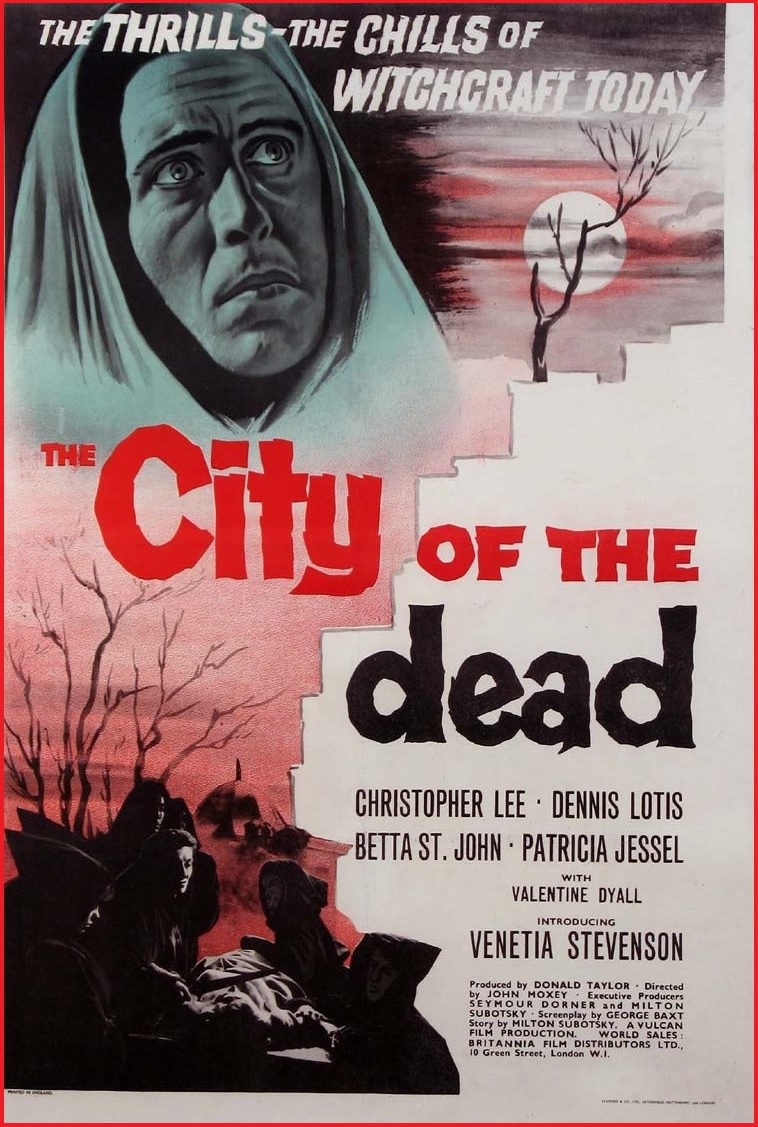
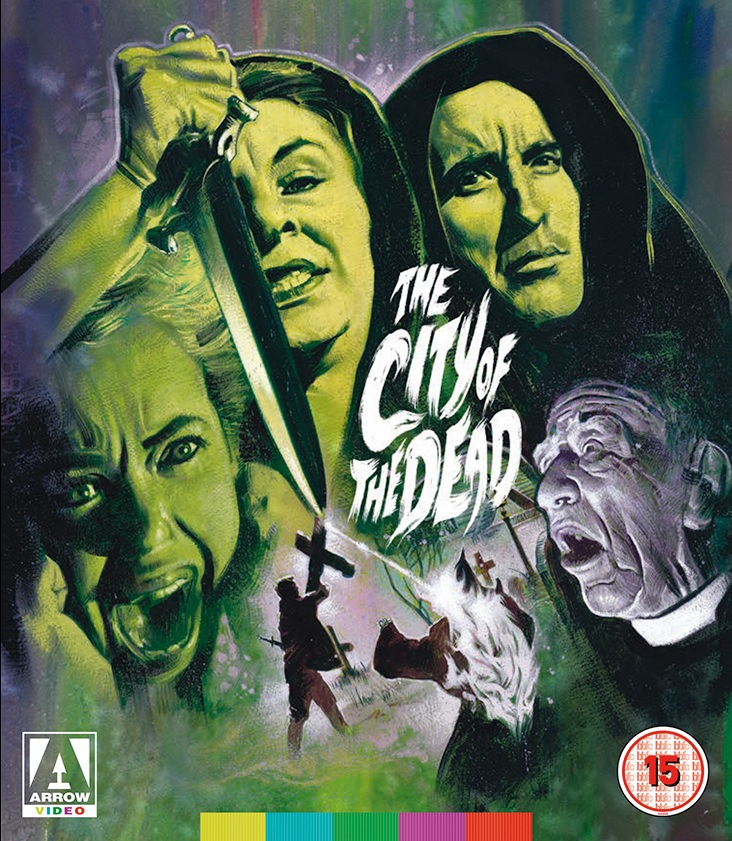
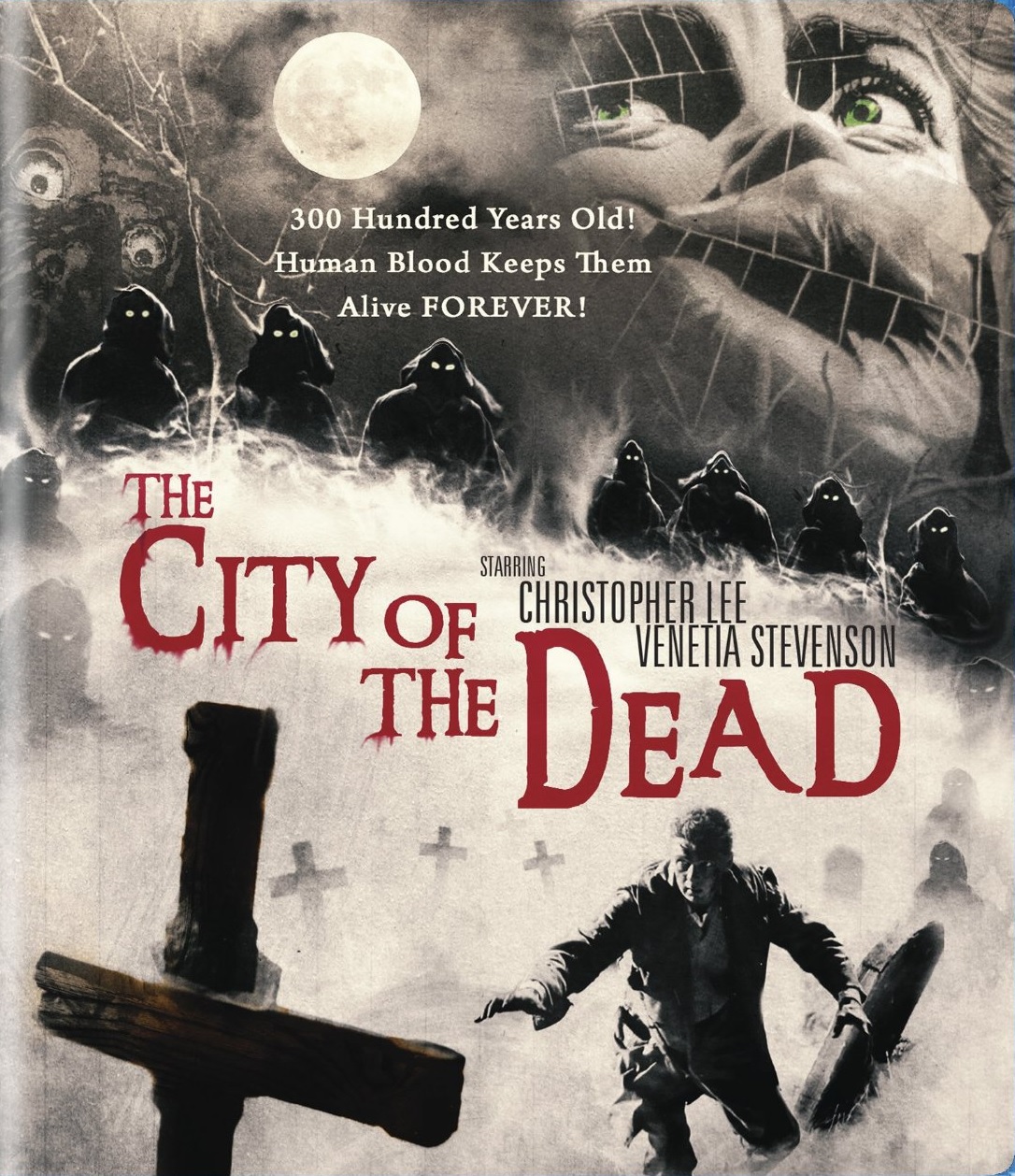
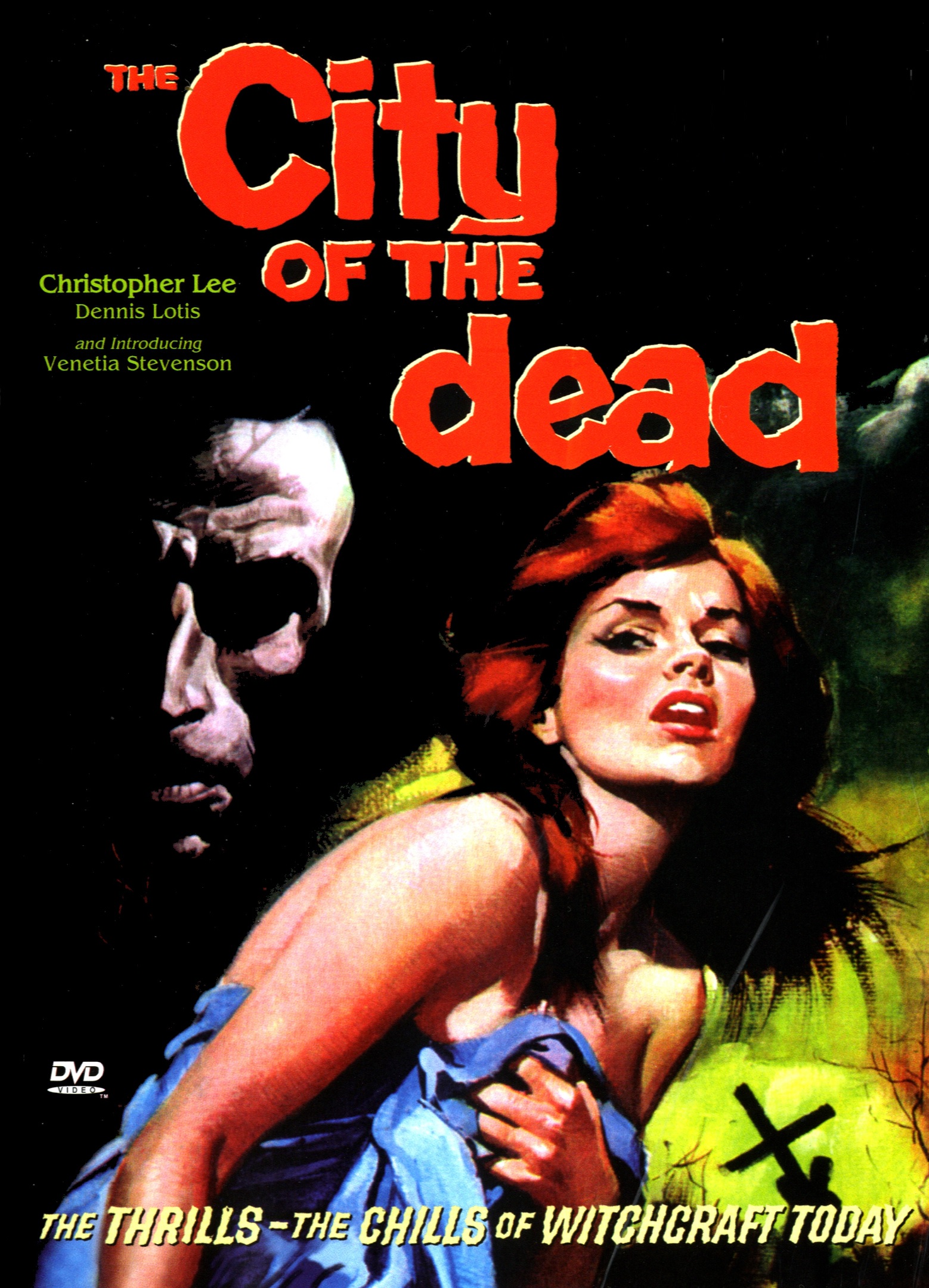
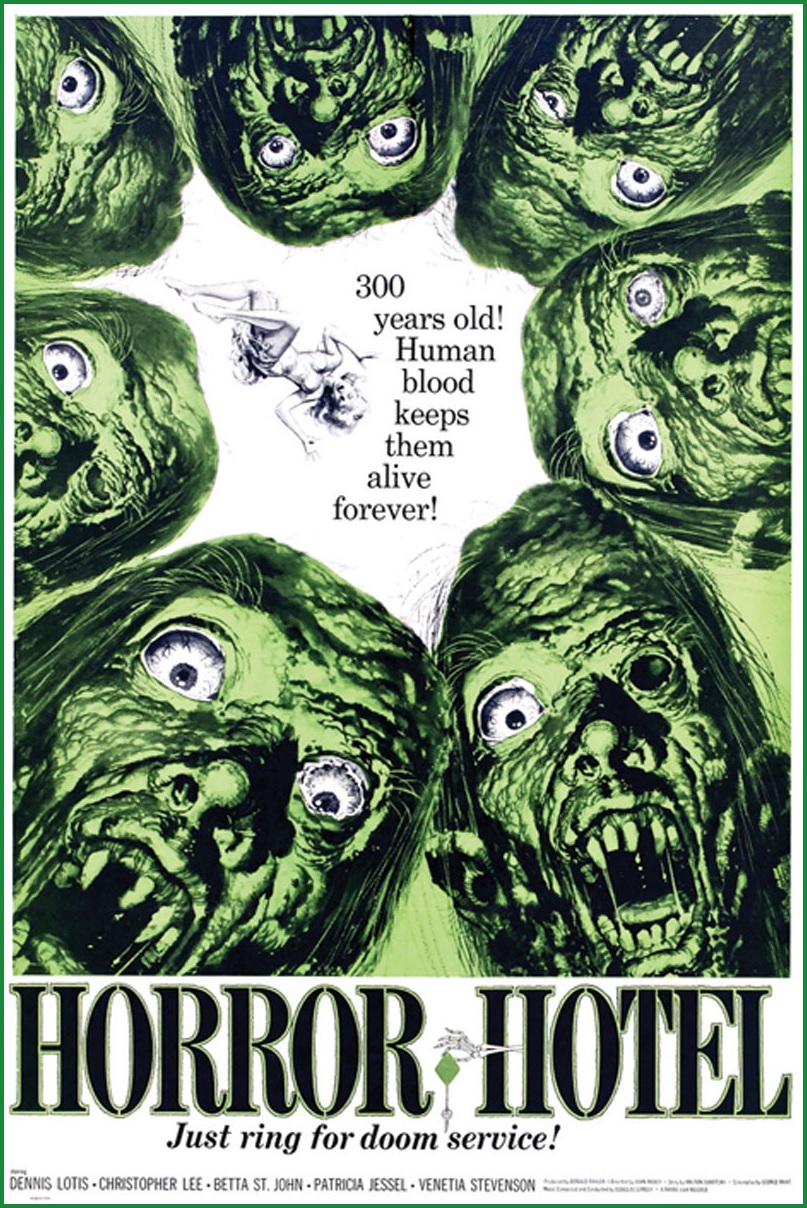
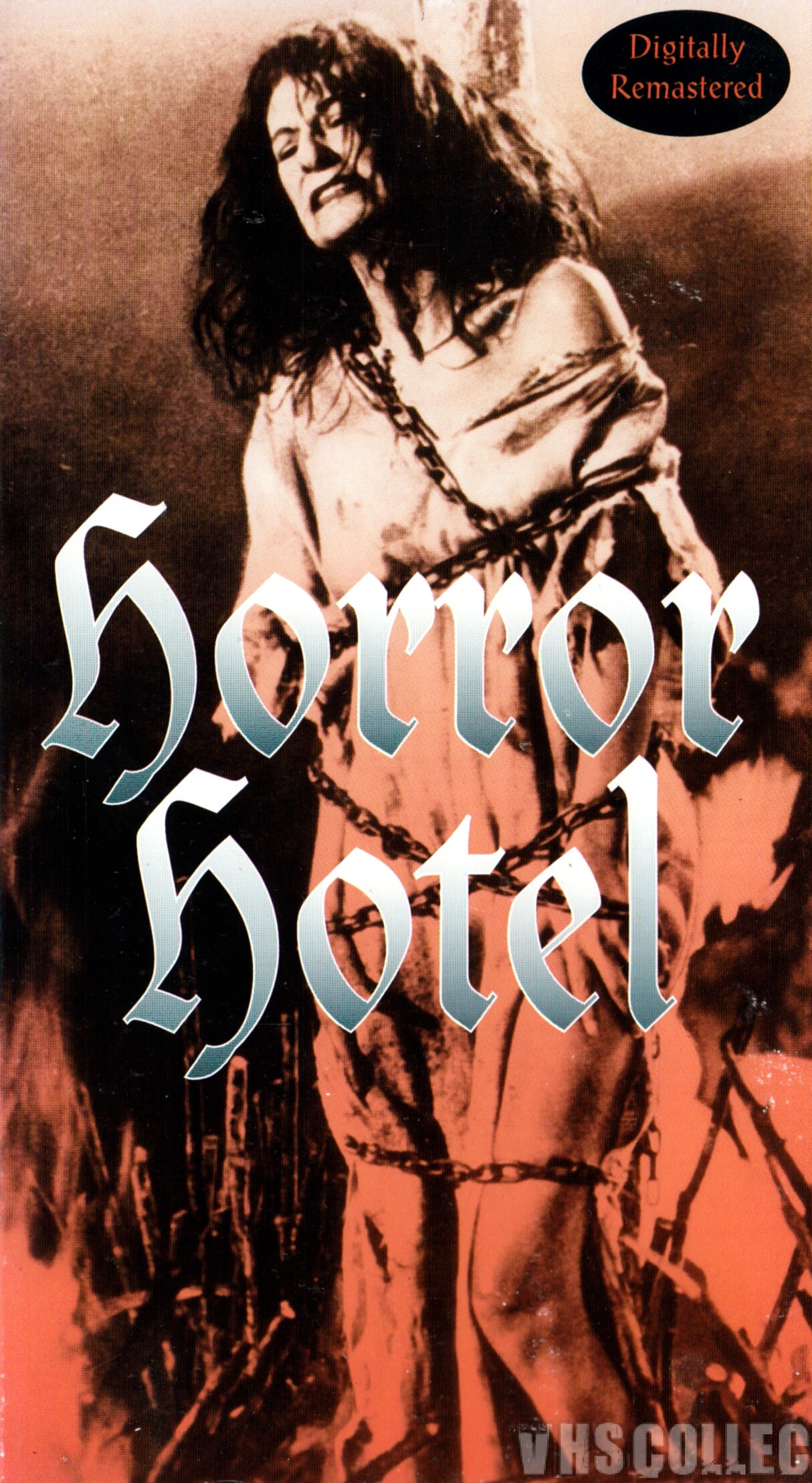
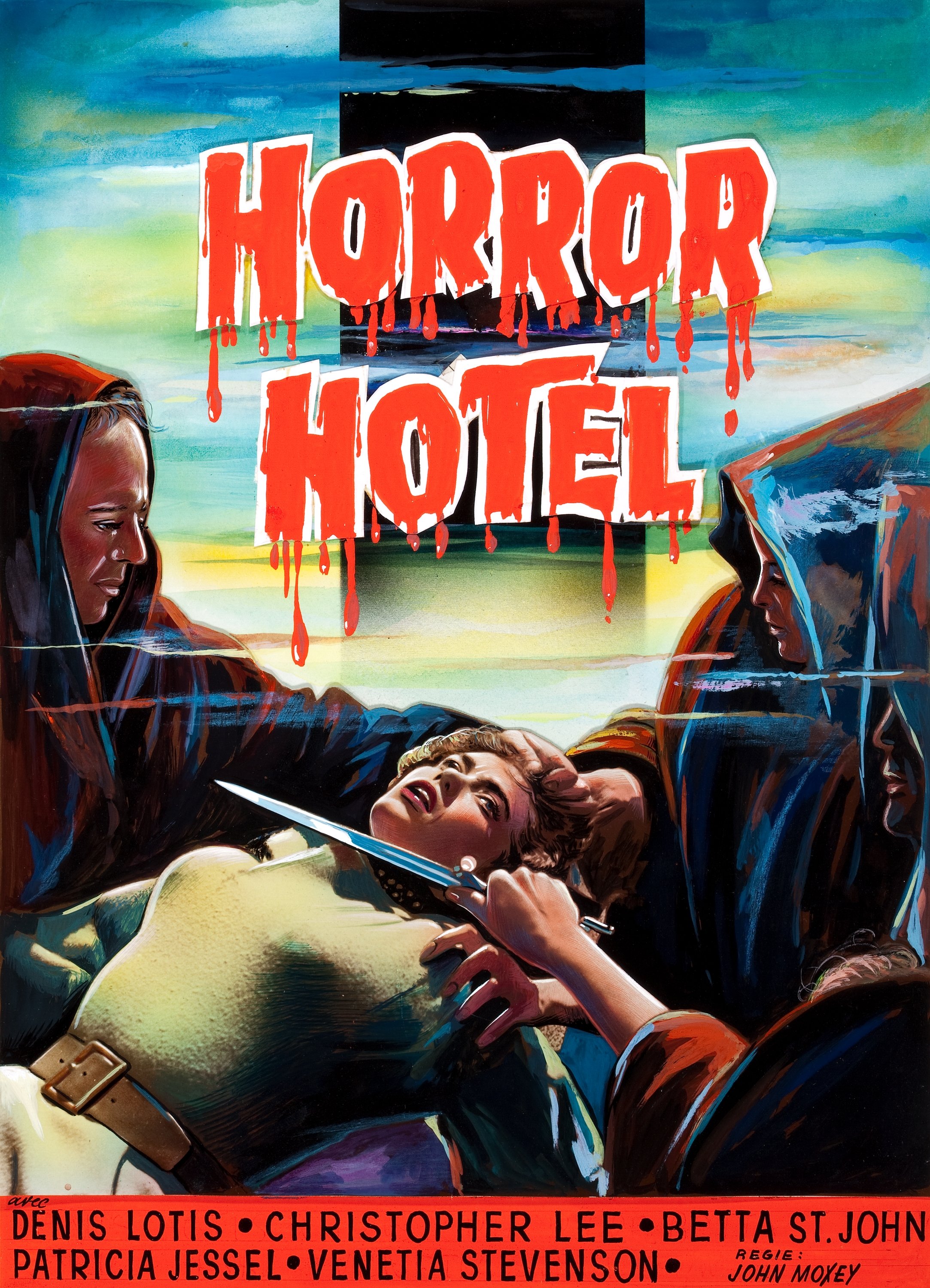
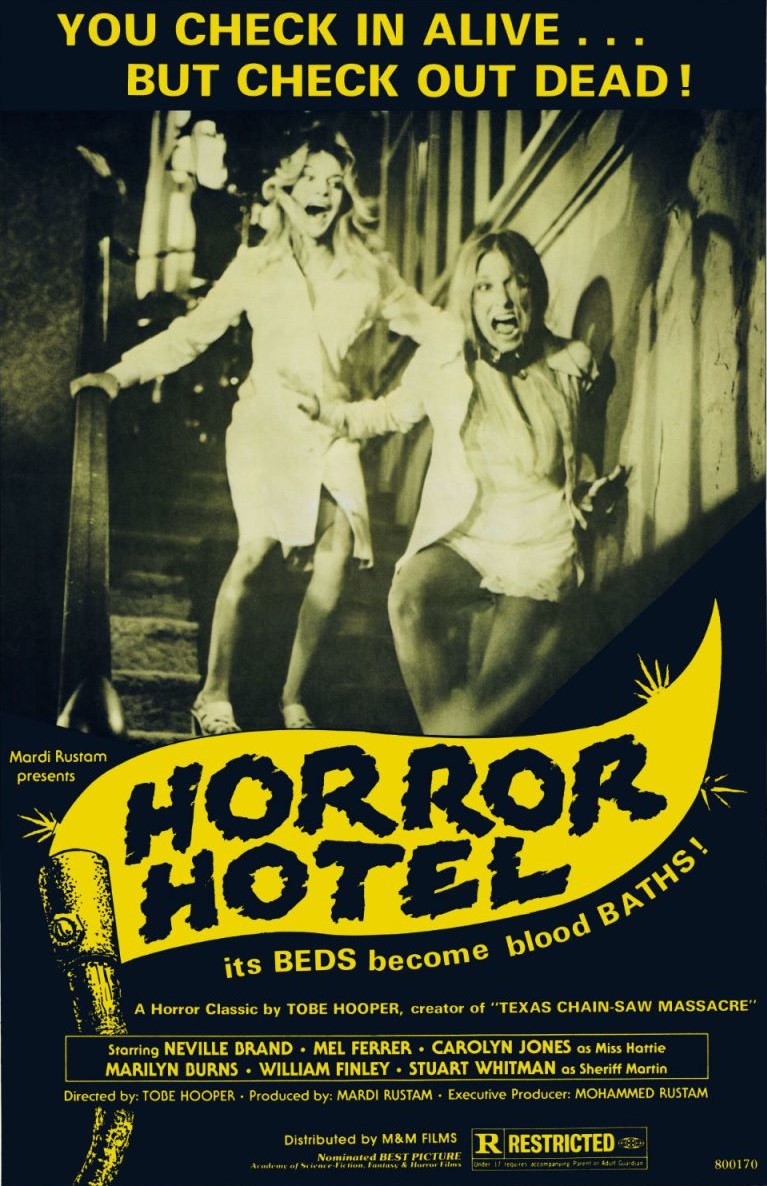
Also in 1960, the same year that PSYCHO was released, Christopher Lee starred in the B-movie 'Horror Hotel' (aka City of the Dead) which opened just 3 months later. Although a witchcraft picture, in one hell of a coincidence, both films share a strong spiritual connection as they start with following a young blonde heroine whom the audience expects to stay throughout the story. Midway into the movie, she checks into a secluded hotel/motel run by an 'eccentric' manager but the viewer's expectations are then ghastly snuffed out; dashed hope as she is abruptly stabbed to death. Despite the structural similarities of the introduction of a then-shocking tactic of having our lead females removed so violently and so early, many critics have said that due to the woman in the Lee film (Venetia Stevenson) being a minor star, her death on screen could never have the same depraved effect like that of major starlet Janet Leigh being maliciously murdered opposite Anthony Perkins. While Leigh's demise is more vicious, I would argue however both deaths are equal for changing the game and forever altering the landscape of modern horror. The exit of each woman forces we the viewer more so from now on to follow the trajectory of the villain and through his deeds, presents us with 2 unsettling realities both psychological & physical almost 2 decades before the emergence of slasher flicks will adopt the same premise: (A) justice for victims maliciously killed by maniacs is not necessarily guaranteed, and (B) our evildoers stand the potential very real possibility of facing no punishment and thus getting away with murder. HORROR HOTEL is also not to be confused with HORROR HOTEL (1977) more commonly known as EATEN ALIVE directed by Tobe Hooper, and starring Marilyn Burns (Sally from The Texas Chainsaw Massacre), William Finley (Winslow from The Phantom of the Paradise), Carolyn Jones (Morticia from The Addams Family), and a young Robert Englund.


 26.
26.
After Hitchcock's death on Apr 29, 1980, Universal began producing follow-ups with 2 sequels:
Psycho II in 1983 &
Psycho III in 1986; a TV movie spin-off entitled
'Bates Motel' in 1987; a prequel with
Psycho IV: The Beginning in 1990; and a color remake with
Psycho in 1998. Perkins returned to his role in II, III & IV - having directed the 3rd film - and Vera Miles returned to her role in II as Marion's sister Lila. The 3 continuations were relateively received by fanfare but for the most part bombed critically; especially blasted for inferiority to the 1960 original. 'Bates Motel' derived from a failed 1987 TV pilot before the release of IV. Perkins had declined to appear in the spin-off & his cameo was played by his stunt double (Kurt Paul) on II & III. The 1998 remake is a virtual shot-for-shot copy of Hitchcock's same camera angles, movements & editing. Also using the original version's soundtrack, it stars Vince Vaughn and Anne Heche as Norman & Marion. The cast also includes Julianne Moore, Viggo Mortensen & William H. Macy. 'A Conversation with Norman', inspired by PSYCHO was released in 2005.
The role of Lila Crane was originally offered to Kim Stanley but she turned it down due to personal reservations about working with Perkins. Vera Miles had been brought onto Hitchcock's 1960 original because she dropped out of his earlier film, 1958's 'Vertigo' due to pregnancy. Having made that film (starring James Stewart) specifically as a showcase for Miles, Hitch was furious of her sidelining & Kim Novak stepped in as her last-minute replacement. As Miles had also appeared in the director's pilot episode of his TV series & in his 1956 film, 'The Wrong Man', she had grown leary of his obsessive fixation on her - something Hitch often did with his blondes - and PSYCHO was to be their last collaboration with the 2 having professionally fallen out with the end of her personal 5yr contract with him. Ironically, inspite of appearing in the trio of sequels, After PSYCHO was released, for years Perkins refused to talk about the part of Norman Bates because all anyone ever wanted to associate him with was that character. Although Norman typecasted him, he said he still would have taken the role even if he knew the character would dog his career.
27.
With PSYCHO's 50th anniversary in 2010, the announcement of a drama film in development about Hitchcock & the making of PSYCHO (and centering on the relationship between the director & his wife, Alma Reville during the filming of the movie in 1959), had confirmed Anthony Hopkins as Hitchcock, Helen Mirren as Alma, Scarlett Johnasson as Janet Leigh, James D'Arcy as Anthony Perkins and Jessica Biel as Vera Miles all set to star.
In Oct 2010, an independent documentary entitled 'The Psycho Legacy' about the lasting impact of the film not only in cinema but in the world, was released on dvd. Also including production stories about the 3 sequels, it received laregley positive reviews from critics & fans. In Jan 2012, A&E announced a TV series named 'Bates Motel' - having nothing to do with the same-named failed 1987 TV pilot - was in development for the network. The series takes place before the events of the original film, chronicling Norman's early childhood with his mother & how she drove him to become a killer - similar to IV's flashback sequences. FOLLOW UP
28.
Unbilled 23yr old Marli Renfro was Janet Leigh's shower scene, nude body double. Both women were curvaceous & voluptuous with nearly exact contours (Renfro at 37-22-35 & Leigh at 36-23-35). Secretly hired, Renfro's identity had been kept a secret by the cast & crew (she wasn't allowed to tell anyone either) and she was paid $500. She came to the film set having been a TV advertising model and as a costumed showgirl/chorus dancer who danced in Las Vegas, Miami & New York. In Sept 1960 she appeared on the cover of
Playboy (coincidentally, looking as if taking a shower) & was one of Hugh Hefner's original bunnies in Chicago (she infact appeared earlier in the magazine with a Jul 1960 layout). Also going on to grace the cover of several other adult magazines, in 1962 she starred in a soft-porn western skin-flick (The Peeper) that was re-edited into a nudie cutie (Tonight For Sure) by Francis Ford Coppola. Renfro was also an active member of nudist colonies, met gangsters, dated Lenny Bruce & rode stallions on Malibu Beach with Steve McQueen. By 1963 she had vanished - forgotten and for many years with unsubstantiated reports, rumors & lies, was presumed murdered...
In Jul 1988, 71yr old actress Myra Davis was raped & murdered by her 22yr old neighbour-handyman, Kenneth Dean Hunt. Her death was unsolved for a decade until a coroner's investigation first linked a semen sample to & then found similar neck markings on his 2nd victim, 60yr old Jean Orloff who was raped & strangled in Mar 1998. Davis was misidentified by several media outlets as 'Renfro' who doubled for Leigh in PSYCHO (and wrongly as the voice of Norman Bates' mother). The confusion had arisen from terminology & the fact that while Marli Renfro was Leigh's body double on the movie set (one who does nudity or acts in scenes too dangerous), Myra Davis was Leigh's stand-in (one who is always dressed & used for non-filming purposes), used to check lighting adjustments & set-ups. Perhaps dubiously, Dean was called yet another criminal obsessive of the film. Intent on acting out the shower scene, he had meant to kill Renfro but mistakenly murdered the wrong woman. (In a 2002 book about the murder, the confusion was compounded by Renfro once again being named the victim and that falsely, Renfro & Davis were the same person - 'Davis' listed as being the real name - wrongly concluding that the dead woman was Marli Renfro; seemingly having died in a gruesome echo to the voyeuristic fictional one she had helped to make so famous). But the case of Davis would be solved. Incredibly, a blunder by the LAPD almost saw justice never take place as Hunt had miraculously managed to avoid detection through a string of unfortunate procedural errors & oversights. Davis' granddaughter had told the police back in 1988 to "check the guy next door" but the police failed to follow up & instead chased the wrong lead. A serial molester, Hunt was on parole after serving 6yrs for the manslaughter of a 67yr old man when he killed his 2nd victim. The Orloff family was preparing to have her body cremated but a sharp employee's re-examination found the similar M.O. matching Davis' death & made the connection to Hunt from DNA evidence supplied by a tip from the suspect's brother-in-law. After Hunt's arrest, in Mar 2001, he went on trial & was found guilty on 2 counts of 1st degree murder but the jury deadlocked on the penalty phase (whether to sentence him to death or life in prison without parole) resulting in a mistrial. A 2nd sentencing trial was held that Jul & once again the jury couldn't agree on sentencing. Weary, the prosecutor’s office decided against a third trial & in Sept, announced they would not seek one. That Nov, Hunt was finally sentenced to serve life without parole. In a Dec 2007 interview, Davis' granddaughter (expressing confusion at the shower scene tie-in) said her grandmother Myra would never have done any nude work. And then the mystery of Renfro would be solved. She was still alive & living in seclusion in the Mojave Desert in Califonia since 1970, completely unaware that she had long been believed dead until she spoke to author Robert Graysmith (whom was tracking down some of her memorabilia on eBay & believes of her to have never gotten the recognition she deserved for her contribution to PSYCHO). Down-to-earth & headstrong, she had faded into an obscure normalcy but had lived a truly adventurous life: an avid outdoorswoman she had fished in Utah, hiked in Alaska & swam with dolphins in Florida. In Dec 1986, she appeared on 'Wheel of Fortune'. She hadn't kept a scrapbook as reminder of her journey (and beauty) as her first husband made her burn all of her old glamour photos out of jealousy. Still on her 2nd marriage, she is now known as Marli Renfro Peterson.
29.
What has come to symbolize pure genius, PSYCHO is a lasting testament to a director breaking all the rules & inventing some powerful new ones. 'The Master of Suspense', Hitchcock's technique & brilliance for psychological manipulation was on dispaly from the start & evident all throughout as viewers entered with a notion (from reviews & critics) of preparing for a terrorfest which was actually more of a stylish combo of mystery & thriller than in visceral horror. Infact, audiences without everly realizing they had been cleverly tricked, had bought into the perception of seeing violence which for the majority most part wasn't there. Having first been lulled into the creeping unease & assault-on-the-senses waiting for the buildup of fright to deliver, the film delivered an intense culture shock to conservative America & an unsuspecting world.
30.
Bar none, the film's 2 best resonating lines:
"It's not like my mother is a maniac or a raving thing. She just goes a little mad sometimes. We all go a little mad sometimes. Haven't you?" and
"Uh-uh, Mother-m-mother, uh, what is the phrase? She isn't quite herself today." Pulling up an easy 3rd:
"A boy's best friend is his mother."




 Posts
Posts


